By Hudson Gold
Jersey City is unlike anywhere else to live. In one neighborhood you'll find a lovingly restored brownstone with original moldings and wide-plank floors. A few blocks away, a converted warehouse loft with exposed brick and steel beams. Closer to the waterfront, a sleek high-rise condo with floor-to-ceiling windows framing the Manhattan skyline. The architecture here is genuinely diverse, which means the interior design styles that work best in Jersey City homes are just as varied.
At Hudson Gold, we work with buyers and sellers across Jersey City every day, and we know that how a home is designed on the inside shapes how it feels to live in and how it shows when it's time to sell. Here's a look at the interior design styles we see thriving in Jersey City homes right now, and how to decide which one fits yours.
Key Takeaways:
- Jersey City's mix of brownstones, lofts, condos, and townhomes means there's no single design style that fits every property
- The best interior design approach works with a home's existing architecture rather than against it
- Certain styles are particularly well-suited to the layouts and light conditions common in Jersey City homes
- Design choices affect not just how you live, but how your home is perceived by buyers when it's time to sell
Industrial Style: Built for Jersey City Lofts
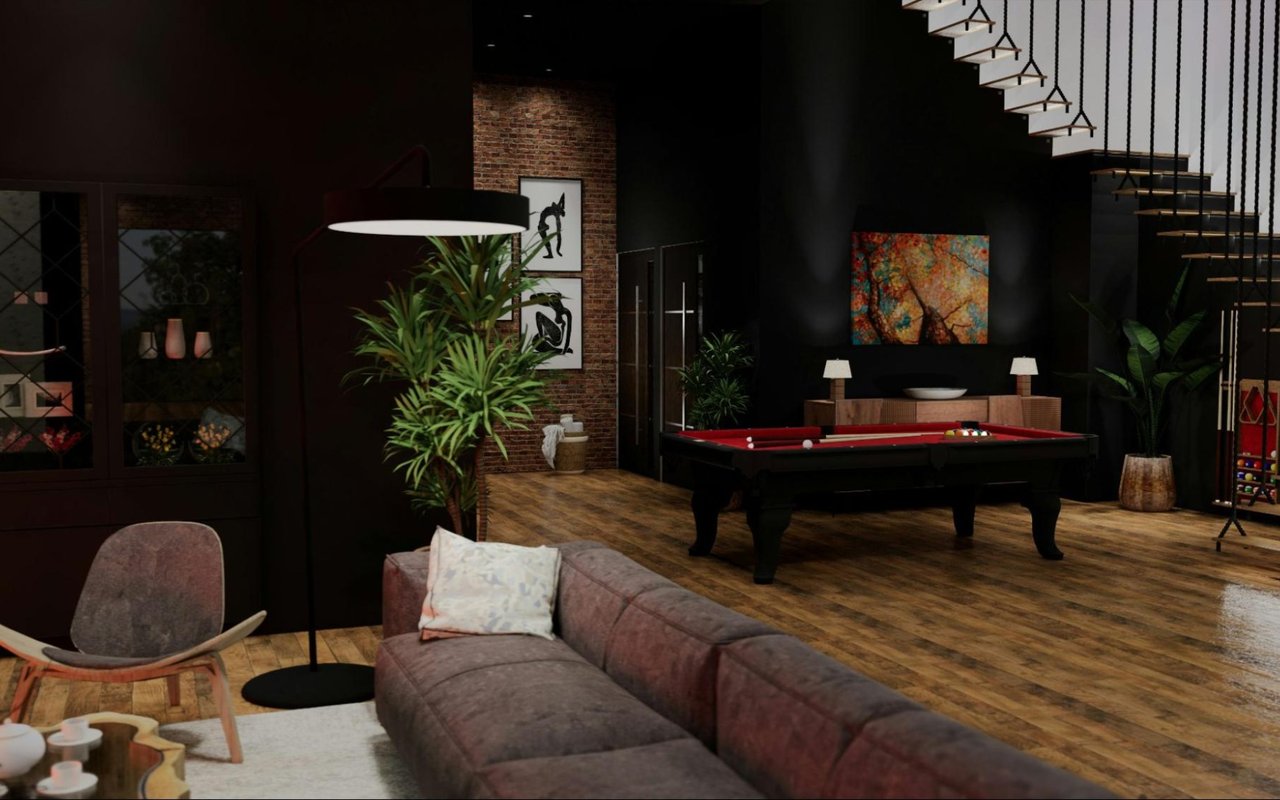
If you live in a converted warehouse, a loft with exposed ductwork, or any space where the bones of the building are part of the appeal, industrial design is your natural starting point. This style doesn't try to hide the raw materials that make a space interesting, but celebrates them. Exposed brick, visible steel beams, concrete floors, and open-plan layouts are all architectural features that industrial design was made to showcase rather than paper over.
Jersey City has no shortage of these spaces, particularly in neighborhoods like the Powerhouse Arts District and along the converted industrial corridors that have attracted buyers and renters drawn to that authentic character.
How to Pull Off Industrial Design in a Jersey City Loft
- Exposed brick, beams, and piping are features, not problems to solve; resist the urge to cover them up with drywall or decorative finishes
- Ground the rawness with warm textures: distressed leather, reclaimed wood shelving, and wool textiles soften the space without undermining the industrial character
- Use pendant lighting with metal or Edison-style fixtures to reinforce the aesthetic; lighting is one of the fastest ways to signal a design style throughout an open-plan space
- Keep the color palette anchored in neutrals — blacks, grays, warm whites, and deep browns — with occasional contrast from dark green or rust-toned accents
Modern Minimalism: Ideal for Waterfront Condos
Jersey City's waterfront condos, particularly those in neighborhoods like Newport and the Waterfront district, tend to come with open layouts, high ceilings, and views that do the heavy lifting. Modern minimalism is the design style built for exactly this kind of space, as it creates breathing room, lets the architecture and views speak for themselves, and avoids anything that competes with the visual focal point outside your window.
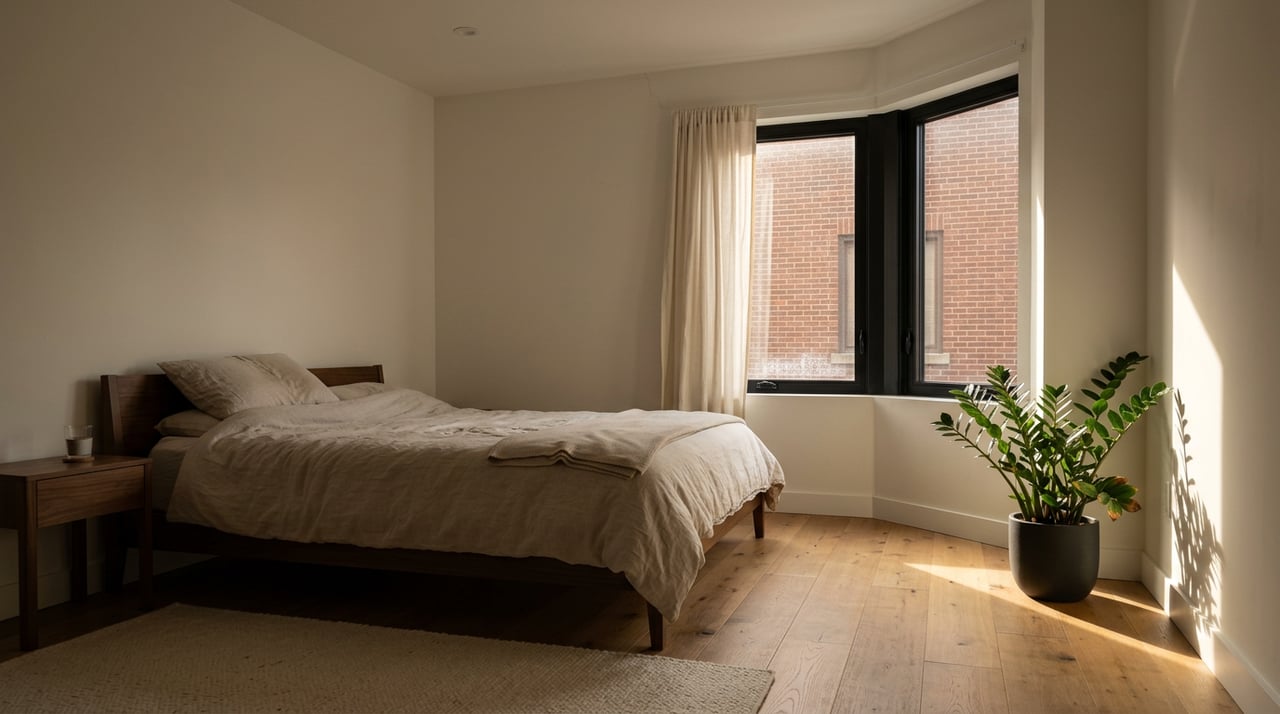
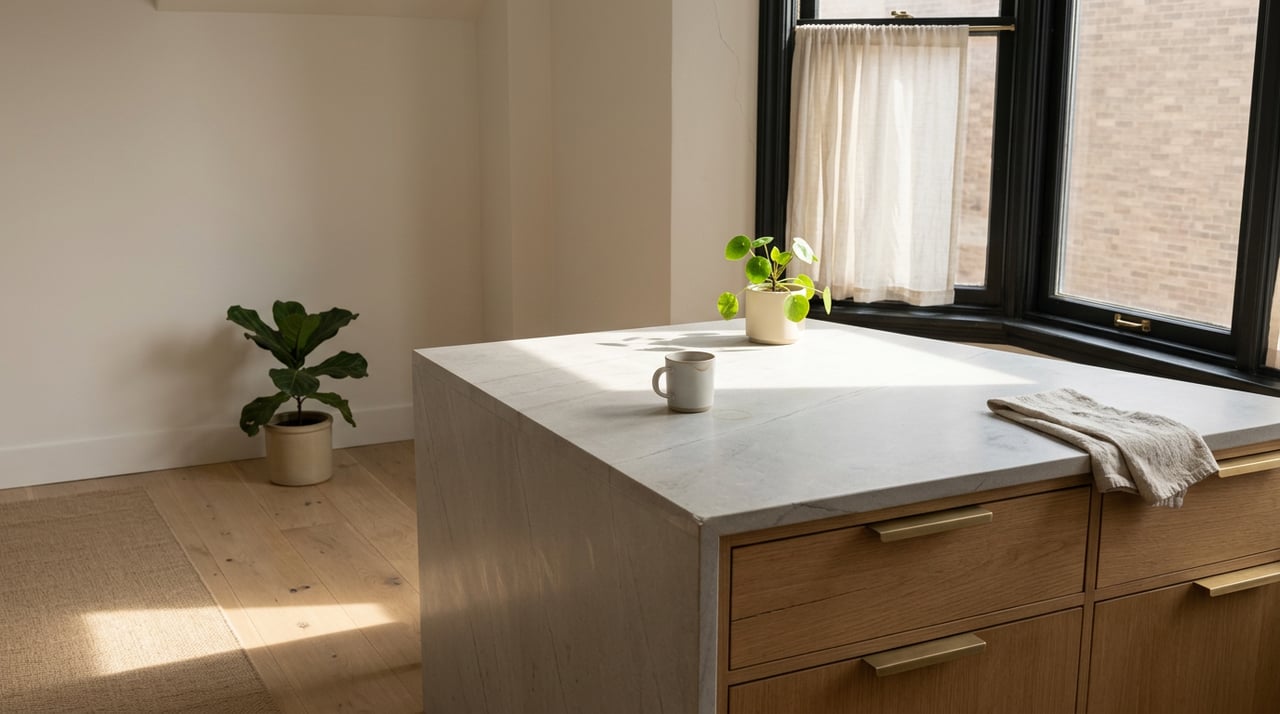
This style has evolved in recent years toward what designers are calling warm minimalism, including clean lines and uncluttered spaces, but with natural wood tones, textured fabrics, and soft earthy colors that prevent the look from feeling cold or sterile.
Getting Warm Minimalism Right in a Jersey City Condo
- Prioritize quality over quantity with a few well-chosen pieces of furniture in a clean layout, which will always outperform a room packed with options that fight each other for attention
- Use natural materials like oak, linen, and stone to add warmth and tactile interest without introducing visual clutter
- In rooms with significant natural light, especially those facing the Hudson, let the light do the work and resist filling every surface with decor
- Built-in storage is your best friend in a minimalist space; visible clutter is the fastest way to undermine the entire aesthetic, especially in Jersey City's typically compact floor plans
Transitional Style: The Smart Choice for Brownstones
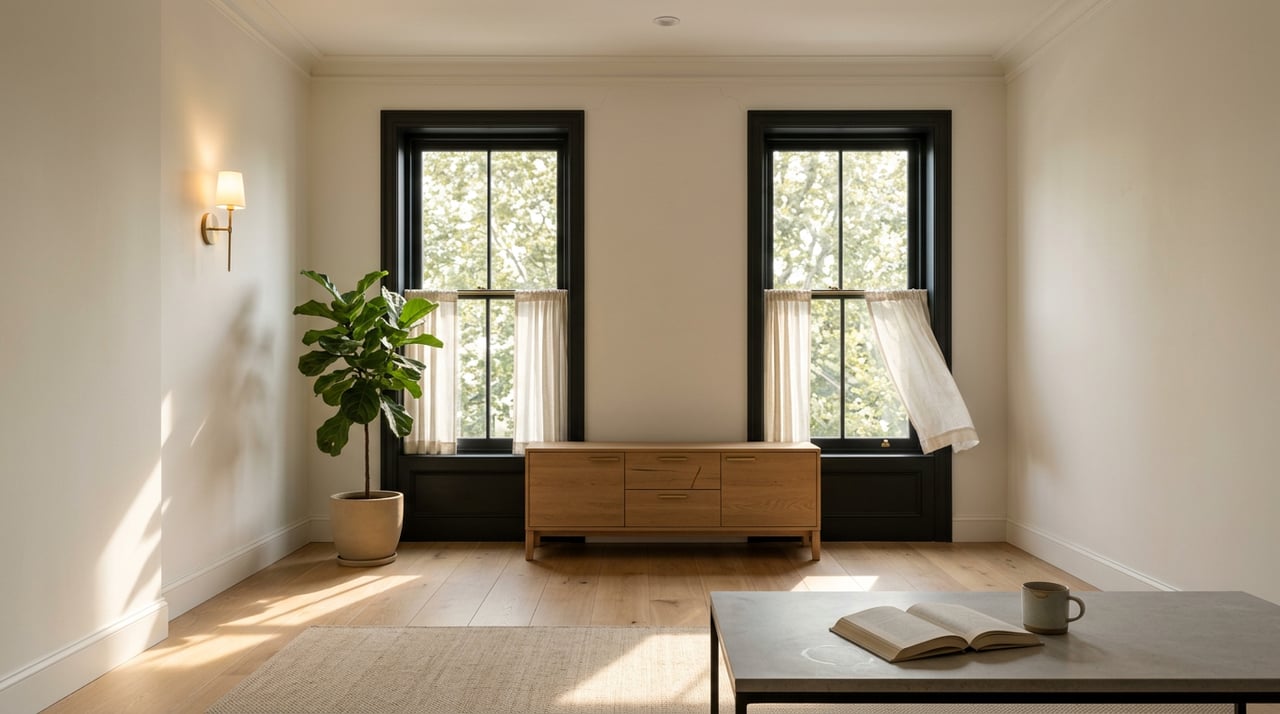
Brownstones are Jersey City's most architecturally rich housing type, and also the most design-demanding. The original details are worth preserving: high ceilings, original moldings, wide-plank floors, marble mantels, and pocket doors all have a character that purely contemporary design can clash with. But going full traditional can make a space feel more like a period piece than a home someone wants to live in today.
Transitional design threads this needle precisely. It honors classic architectural elements while pairing them with updated furniture, current finishes, and a palette that feels current rather than dated. It's the style we see working most consistently in Jersey City's historic brownstone stock.
How Transitional Design Works in a Brownstone
- Preserve and highlight original architectural details — restored moldings, original fireplaces, and refinished hardwood floors are selling points, not obstacles
- Pair classic architectural bones with clean-lined, contemporary furniture that doesn't compete with the original details but doesn't disappear next to them either
- Use a neutral base palette anchored in warm whites, soft greiges, or muted tones and introduce personality through textiles, artwork, and carefully chosen accent pieces
- Updated kitchens and bathrooms can be fully contemporary in their finishes while still feeling cohesive with a transitional living space
Japandi: A Natural Fit for Compact Urban Living
Japandi — the fusion of Japanese and Scandinavian design sensibilities — has become one of the most relevant interior design styles for city homeowners, and it translates particularly well to Jersey City's mix of compact condos and smaller brownstone units. The philosophy is built around intentional simplicity: furniture chosen for purpose and craft, natural materials used with restraint, and a palette of soft earthy tones that creates a sense of calm without sacrificing personality.
In a city where square footage is precious and the pace of life is fast, the idea of a home that feels genuinely restful and uncluttered has real appeal.
Japandi Principles That Work Well in Jersey City Homes
- Choose low-profile furniture with clean lines and natural finishes, such as pieces that feel considered and intentional rather than default or filler
- Use a muted, earthy color palette: soft greiges, warm taupes, muted sage, and anthracite create a cohesive and calming atmosphere that works across room types
- Incorporate natural materials throughout, but use them consistently so the space feels unified rather than eclectic
- Negative space is intentional in Japandi design; resist the urge to fill every surface and wall, especially in smaller Jersey City units where restraint creates the impression of more room
Contemporary Eclectic: For the Personality-Driven Home
Not every Jersey City home owner wants to commit to a single design language, and honestly, the city's energy supports a more layered, personality-driven approach. Contemporary eclectic design doesn't mean a room full of unrelated things. It means a thoughtfully curated space where different eras, textures, and influences are brought together by a unifying color palette, a consistent scale, and a clear point of view.
This style works particularly well in larger brownstones and townhomes with multiple rooms that can each carry a distinct character while still feeling cohesive as a whole.
How to Make Eclectic Design Feel Curated, Not Chaotic
- Anchor the space with a dominant palette, with two or three core colors that recur throughout the room to tie together pieces from different styles and eras
- Scale matters as much as style: mixing a small vintage piece with an oversized modern sofa creates visual tension, not harmony; make sure pieces relate to each other spatially
- Let one strong piece drive each room, whether it’s a statement sofa, a significant piece of art, or an architectural lighting fixture, and build everything else around it rather than competing with it
- Jersey City's proximity to New York City means access to some of the best vintage markets, showrooms, and design shops in the world; use that advantage to find genuinely interesting pieces rather than defaulting to what's easily available
Mid-Century Modern: Timeless Appeal Across Property Types
Mid-century modern has earned its staying power. The style's clean lines, organic shapes, and balance of form and function feel at home in nearly every Jersey City property type, from classic brownstones to contemporary waterfront condos. The style's defining characteristics — tapered furniture legs, warm wood tones, geometric patterns, and a balance of form and function — feel both timeless and current in a way that few design styles achieve.
For Jersey City homeowners thinking about resale, mid-century modern is also one of the safest design investments. Its broad appeal means it rarely alienates buyers and often photographs exceptionally well in listing materials.
Mid-Century Modern Elements That Hold Up in Any Jersey City Home
- Furniture with tapered legs, curved silhouettes, and warm wood finishes anchors the style without requiring a total room overhaul
- A mix of natural and man-made materials is authentic to the style and creates visual variety without chaos
- The color palette can range from warm neutrals to more expressive tones like mustard, burnt orange, and olive
- Statement lighting, such as sputnik chandeliers, arc floor lamps, and globe pendants, is one of the most effective ways to signal mid-century design without committing to a full furniture overhaul
FAQs
How do we know which interior design style works best for our specific Jersey City home?
Start with the architecture. The bones of your home point strongly toward certain styles and away from others. A high-ceilinged loft with exposed brick and a warehouse loft ceiling wants industrial or eclectic treatment. A classic brownstone with original moldings calls for transitional or mid-century modern. We're always happy to walk through a home with owners and talk through what we're seeing in similar properties right now.
Does interior design style actually affect resale value in Jersey City?
It affects perceived value significantly, and in a market like Jersey City's, where buyers often make quick decisions after competitive tours, first impressions matter. A home that feels cohesive, well-designed, and move-in ready commands more attention and stronger offers than one that feels unfinished or visually inconsistent. We see this play out in listings regularly.
Can we mix interior design styles rather than committing to just one?
Absolutely, and in Jersey City homes it's often the right approach. The key is having an underlying logic — a consistent palette, a shared material language, or a clear focal point in each room — that keeps mixed styles feeling intentional rather than accidental. The most successful Jersey City interiors we've seen tend to have a primary style with secondary influences layered in thoughtfully.
Contact Hudson Gold Today
Whether you're settling into a new home and figuring out how to make it feel like yours, or you're preparing a property for the market and want it to show its best, we at Hudson Gold are here to help you see your space clearly and make smart decisions. We know Jersey City's homes inside and out, from the brownstones, the lofts, the waterfront condos, and everything in between.
If you’re ready to start your real estate journey, the
Hudson Gold team is ready to help.


 browse the latest trends